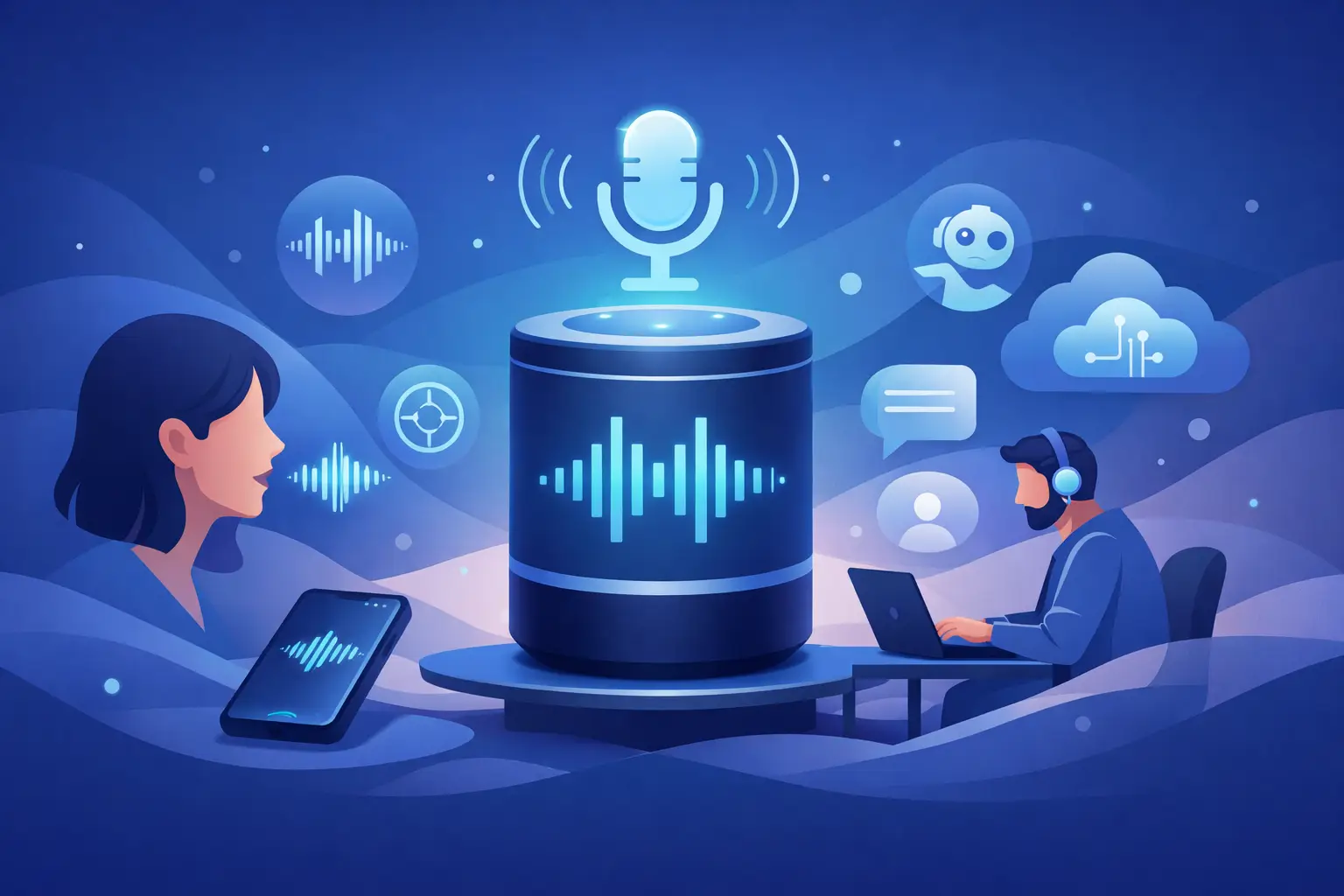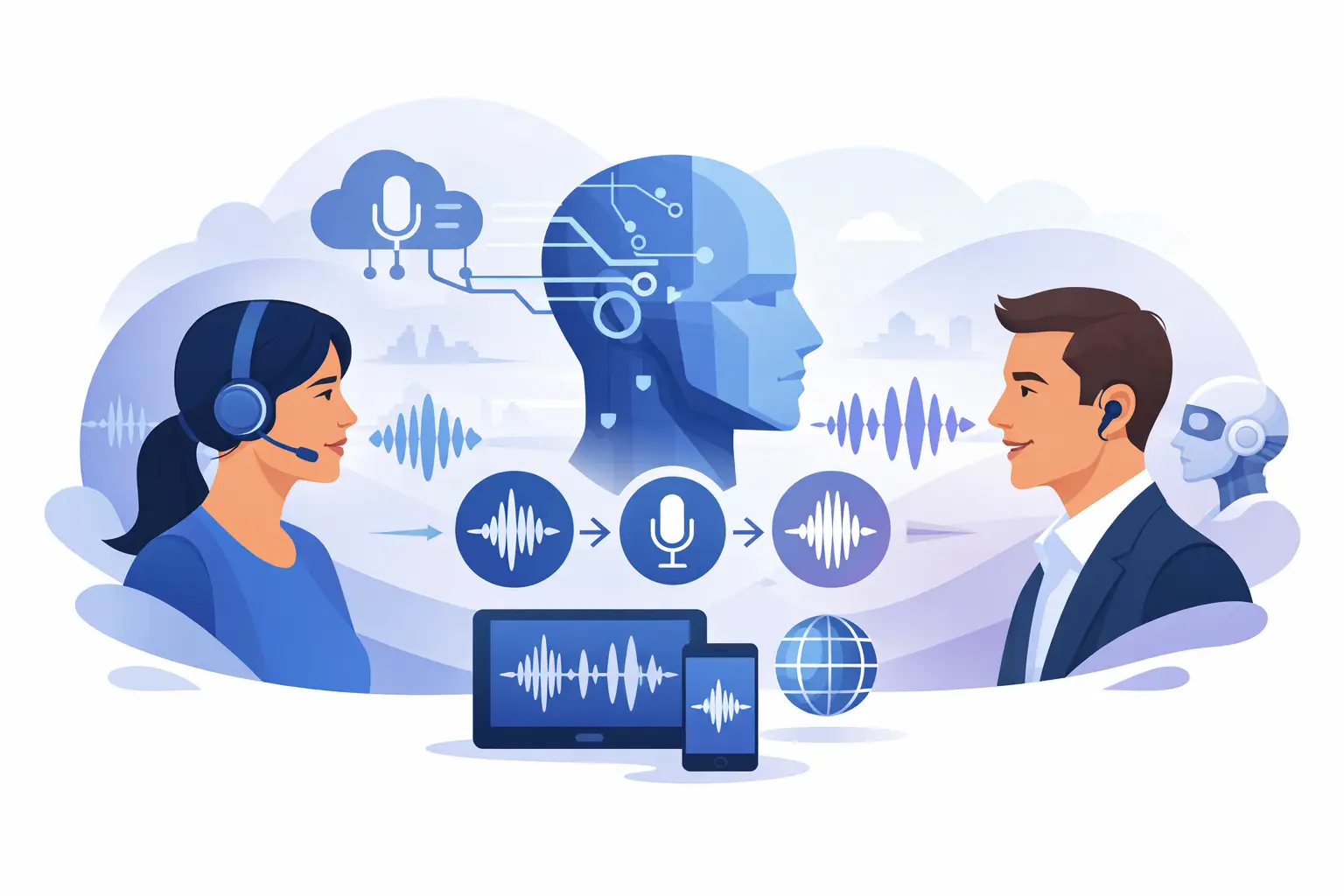
What a Speech to Speech AI Platform Should Do
See what a speech to speech ai platform should actually deliver - low latency, natural calls, integrations, and measurable ROI at scale.
On this page
Most teams do not realize their phone automation is broken until customers start talking over it.
That is the real test of a speech to speech ai platform. Not whether it can answer a basic FAQ, but whether it can keep up with a real conversation - mid-sentence interruptions, messy phrasing, repeated questions, account lookups, transfers, and all. If the experience feels slow or scripted, customers notice immediately. So do your agents, who end up cleaning up failed calls instead of focusing on higher-value work.
For operations leaders, support managers, and growth teams, the question is no longer whether voice automation is possible. The question is whether the platform can perform under real business pressure. That means fast response times, natural conversation flow, flexible integrations, and a clean path to human handoff when the call needs judgment.
What makes a speech to speech AI platform different
Traditional voice bots break the conversation into separate steps. One system converts speech to text. Another system decides what to say. A third turns text back into audio. That design can work for simple flows, but it often creates lag, awkward turn-taking, and that familiar robotic feel customers abandon fast.
A speech to speech AI platform is built for direct, live conversation. Instead of treating the call like a chain of disconnected tasks, it processes audio in real time and responds with voice that is designed to sound immediate and natural. The difference is not cosmetic. It changes whether the caller feels heard or trapped.
That matters most in high-volume environments where every extra second compounds across thousands of calls. Appointment scheduling, order tracking, lead qualification, support triage, and after-hours intake all depend on fast exchanges. If a system pauses too long, misses intent, or forces callers to repeat themselves, automation stops saving time and starts creating more work.
Speed is not a nice-to-have
Latency is one of the clearest indicators of platform quality. In voice automation, people feel delay before they can explain it. A pause of even a second can make the interaction feel uncertain. The customer starts wondering if the system heard them, then repeats themselves, then talks over the reply. The conversation gets worse from there.
Low-latency voice AI changes that dynamic. When responses land quickly, the exchange feels closer to a live agent call. That creates practical business value. Calls move faster, completion rates improve, and customers are less likely to hang up or ask for a human before the system has had a chance to help.
For teams comparing vendors, this is where demos can be misleading. A polished scripted demo says very little about actual performance during interruptions, variable call quality, and CRM lookups. Ask what happens when the caller changes direction halfway through a sentence. Ask how the platform handles silence, overlap, and unclear intent. Ask for real response timing, not just a promise that it is fast.
Natural conversations require more than a good voice
A human-sounding voice matters, but it is only one layer. The real measure is whether the platform understands conversational behavior.
Can it handle interruptions without losing context? Can it recover when the caller gives partial information? Can it clarify instead of collapsing into a fallback response? Can it ask the next best question based on the workflow, not just read a script?
This is where many legacy IVR systems and basic voice bots fall short. They can present options, collect simple inputs, and route calls. They struggle when the caller speaks naturally. Real customers do not say things in clean menu-ready phrases. They ramble, switch topics, correct themselves, and ask follow-up questions. A strong platform is built for that reality.
The best systems also know when not to force automation. Human handoff is not a failure state. It is part of a well-designed service flow. If the issue is sensitive, high-value, or outside policy, the platform should transfer the call with context intact so the agent can continue without making the customer start over.
Integration determines business value
A speech to speech ai platform does not create much value if it lives in isolation. The real payoff comes when it can take action inside the systems your team already runs.
That includes CRMs, scheduling tools, ticketing systems, calendars, order databases, payment workflows, webhooks, and telephony infrastructure. Without those connections, the AI can talk, but it cannot do much. It becomes a front-end layer that still depends on humans to complete the task after the call.
With the right integrations, the call becomes operational. The AI can verify a customer, update a record, book an appointment, qualify a lead, trigger a workflow, or route a case based on business logic. That is where cost savings become measurable. It is also where speed improves customer experience instead of just reducing labor.
For technical teams, infrastructure flexibility matters too. Some businesses want a managed setup and fast deployment. Others need BYOC credentials, API control, SIP compatibility, region-specific telephony, or compliance alignment. A platform that supports both self-serve speed and enterprise-grade implementation is usually better positioned for long-term adoption.
Where the strongest ROI shows up first
Not every workflow is a good fit for automation on day one. The best starting points are repetitive, high-volume interactions with clear outcomes.
Inbound support is a strong example. Order status, account verification, store hours, appointment confirmation, and common policy questions consume agent time but rarely require complex judgment. A well-configured voice agent can resolve many of those calls quickly while escalating edge cases.
Lead qualification is another high-return use case. Speed matters in sales, especially when inbound interest is high. If a voice agent can answer immediately, ask the right qualifying questions, capture details, and route the lead to the right rep, the business gains coverage without adding headcount.
Healthcare, real estate, e-commerce, and service businesses often see early gains because they deal with recurring call patterns and time-sensitive customer needs. The exact numbers depend on call mix, but the pattern is consistent: the more repetitive the workflow, the faster the ROI appears.
What buyers should look for before choosing a platform
The wrong buying process often focuses too heavily on the voice itself. The better approach is to evaluate business performance.
Start with conversation quality. Does the system sound natural under interruption, not just in a polished script? Then look at latency, integration depth, transfer logic, analytics, deployment speed, and control over infrastructure.
After that, look at operating model. Some teams need to launch in days with minimal support. Others need implementation help, SLAs, and tighter governance. The right provider should match your internal capacity, not force you into a single model.
It also helps to pressure-test the reporting layer. You need to know more than total call volume. You need visibility into resolution rates, transfer reasons, average handling time, containment, drop-off points, and workflow performance. If you cannot measure outcomes, you cannot improve them.
Platforms like Kalem stand out when they combine fast deployment with low-latency speech-to-speech performance, practical workflow integrations, and human escalation built into the experience. That balance is what turns voice AI from a demo into an operating layer.
The trade-off most teams miss
There is always a balance between control and speed.
A highly customizable platform can fit complex environments, but it may require more setup, testing, and internal ownership. A simpler platform can get live quickly, but it may limit how deeply you tailor workflows or infrastructure. Neither is automatically better. It depends on your call volume, technical resources, compliance needs, and how much change your team can absorb right now.
The same goes for use-case scope. Trying to automate every phone interaction from day one usually slows deployment and hurts quality. Teams that start with a narrow, high-volume workflow often get better results faster. Once the platform proves itself, expansion becomes easier and less risky.
The companies getting the most from voice AI are not treating it like a novelty feature. They are treating it like a performance system. They care about answer speed, resolution, conversion, staffing efficiency, and customer experience at the same time.
That is the lens to bring to any speech to speech AI platform evaluation. Not whether it sounds impressive in a demo, but whether it can carry real conversations, complete real work, and give your team room to grow without rebuilding the stack six months later.
If your phones are still tied up with repetitive calls, the opportunity is not abstract. It is sitting in your queue, waiting for a faster answer.